

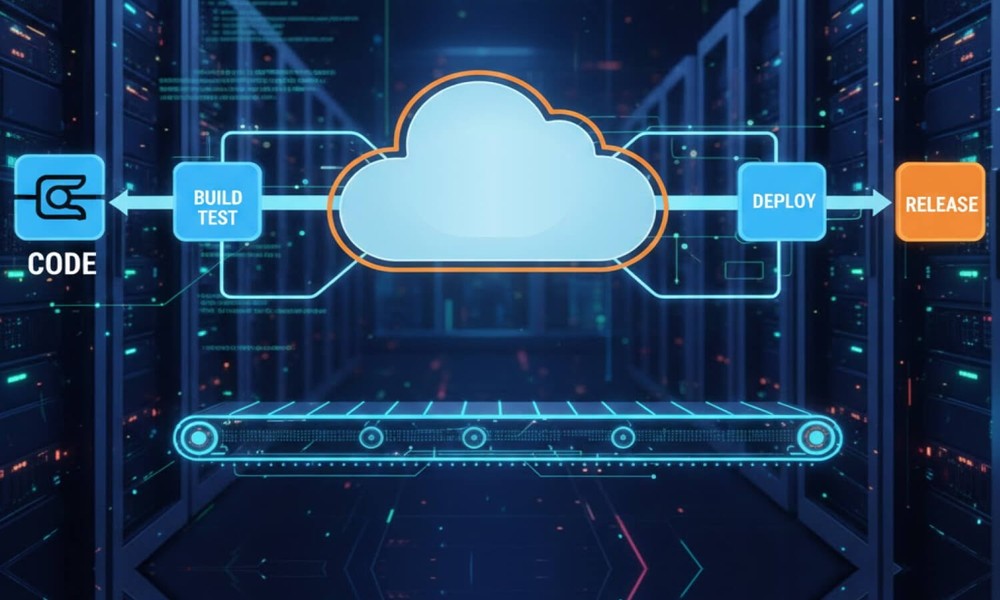
There’s a certain point in the growth of any containerised infrastructure where the processes that got the team this far stop being adequate for where things are heading. Manual deployments that were manageable at ten hosts become a source of risk and inconsistency at fifty. CI pipelines that stop at the build stage leave a gap between tested code and running infrastructure that someone has to fill manually. Monitoring approaches that worked when everything lived in one place start showing gaps as hosts spread across cloud regions and edge locations.
This is the inflection point where the choice of container management system stops being a tooling preference and starts being an operational decision with real consequences. The platforms that help teams through that transition successfully aren’t necessarily the ones with the longest feature lists – they’re the ones that handle the specific capabilities that matter at scale with enough depth and reliability to be genuinely useful under real operational conditions.
Batch deployments and CI pipeline integration are two of the most visible of those capabilities. But they’re part of a broader picture. Here are ten dimensions worth examining when evaluating how far a container management system actually goes.
1. Batch Deployments That Treat Scale as Normal
The value of batch deployment capability scales directly with the size of the fleet it’s applied to. A system that handles batch deployments gracefully at ten hosts but starts showing reliability or performance issues at a hundred isn’t solving the problem teams will actually face as their infrastructure grows.
What distinguishes genuinely capable batch deployment from a surface-level implementation is the handling of partial failures. When a deployment succeeds on ninety hosts and fails on ten, the system should surface exactly which hosts failed, why, and what state they’re in – without requiring manual investigation across the fleet. That failure transparency is what makes batch operations trustworthy at scale rather than a source of uncertainty.
2. CI/CD Integration That Goes Both Ways
CI/CD integration in a container management context is often discussed as though it’s a one-way street – pipelines push deployments to the platform, and that’s the extent of the relationship. The more capable implementations go further than that.
A management platform for containers that exposes webhook support, deployment status callbacks, and health check results back to the pipeline gives teams the ability to build genuinely intelligent automation. A pipeline that can verify fleet-wide deployment success before marking a release complete, or that can trigger a rollback automatically if post-deployment health checks fail, is a meaningfully more powerful tool than one that simply fires and forgets.
3. Template Versioning as Operational Infrastructure
Deployment templates are only as useful as the version control system behind them. A template that exists as a single mutable definition – updated in place with no history – provides consistency benefits but no auditability and no reliable rollback path. Template versioning that preserves the full history of changes, attributes those changes to specific users, and allows any previous version to be redeployed without reconstruction is what elevates templates from a convenience to genuine operational infrastructure.
For teams operating in regulated environments or managing infrastructure on behalf of clients, that version history is also an audit trail – a record of what was deployed, when, and what changed between versions that can be produced during a compliance review or incident investigation.
4. A management platform for containers Built Around Multi-Tenancy
Container management at scale rarely happens within a single organisational boundary. MSPs manage infrastructure for multiple clients. Enterprise teams manage separate environments for different business units or stages. DevOps teams maintain distinct projects for production, staging, and development with different access requirements for each.
A management platform for containers that handles multi-tenancy as a core architectural property – with project-based isolation, independent access controls, and separate audit trails per environment – is fundamentally more suitable for these contexts than one that treats multi-tenancy as an add-on. The distinction shows up most clearly when something goes wrong in one environment and the team needs confidence that the investigation and remediation is cleanly contained.
5. Secure Terminal and File Access Integrated Into the Platform
The need to access a host directly – to investigate an anomaly, check a log file, adjust a configuration – doesn’t disappear when a container management system is in place. What changes is how that access is provided and governed.
A platform with integrated, browser-based terminal and file access removes the dependency on SSH credential management while keeping the access itself available and useful. Sessions are logged, access is permission-controlled, and the audit trail that compliance teams require is generated automatically rather than depending on individual engineers to document their actions. For teams managing hosts across environments where direct SSH access is awkward or restricted, this integration is what makes remote operations practically viable.
6. Health Monitoring That Connects to Deployment Events
Resource metrics and container state are more useful when they’re presented in the context of deployment history. A spike in memory utilisation is interesting. A spike in memory utilisation that coincides with a deployment thirty minutes ago is actionable. A platform that surfaces both pieces of information together – that connects the operational state of the fleet to the events that may have caused it – significantly shortens the diagnostic path when something goes wrong.
This contextual connection between deployment events and health metrics is a feature that’s easy to overlook during evaluation and hard to live without once teams have experienced it. It changes the post-deployment review from a separate process into something that happens naturally as part of monitoring the fleet.
7. Large scale host management Without the Operational Overhead
The promise of a good container management system is that large scale host management doesn’t require proportionally large operational effort. Onboarding new hosts should be fast and consistent. Applying updates across the fleet should be a single operation rather than a per-host process. Monitoring should surface the information that matters without requiring manual configuration for each new host added to the fleet.
Platforms that deliver on this promise are those where the operational model was designed for scale from the beginning – where the workflows that work for twenty hosts work equally well for two hundred, and where growth in fleet size translates to more infrastructure under management rather than more operational burden per host.
8. Rollback as a Routine Operation
Teams that treat rollback as an emergency procedure – something to be attempted when things have gone badly wrong – tend to find it unreliable precisely when they need it most. Teams that treat rollback as a routine operation – something that’s tested, understood, and as straightforward as a forward deployment – find that it changes how they approach releases entirely.
A container management system that supports rollback through the same versioned template mechanism used for forward deployments makes this possible. The previous known-good state is a defined version, not a reconstruction. Reverting to it is a deliberate, repeatable action with predictable outcomes. That reliability is what allows teams to deploy frequently and confidently rather than treating each release as a high-stakes event.
9. Alerting and Scripting Embedded in Deployment Templates
Alerting configurations and post-deployment scripts that live outside the deployment template are alerting configurations and scripts that can fall out of sync with the deployment they’re supposed to support. Embedding them in the template itself – so that every host receiving a deployment inherits its monitoring and automation configuration as part of the same operation – keeps the operational stack consistent in the same way that templating keeps the application stack consistent.
This matters particularly in environments where hosts are added frequently or where the fleet spans multiple environments with different operational requirements. The alternative – manually configuring alerting and scripts for each new host or environment – is a process that works until it doesn’t, and the failure mode is usually invisible until something that should have been caught quietly isn’t.
10. Beyond the Basics: What Separates Platforms at the Margin
The features discussed above are, in various forms, present in most container management platforms worth evaluating. What separates platforms at the margin – the difference between a system that’s adequate and one that’s genuinely excellent – tends to come down to implementation depth rather than feature presence.
Batch deployments that handle failure transparently. CI integration that goes beyond one-way triggering. Template versioning with full history and attribution. Multi-tenancy that’s architectural rather than cosmetic. These are the capabilities where the gap between platforms that have done the work and those that haven’t becomes most visible in production. Evaluating against that depth, rather than against a surface-level feature checklist, is what tends to produce container management decisions that hold up as infrastructure scales and operational demands evolve.
In Conclusion
Batch deployments and CI pipeline integration are entry points into a broader conversation about what container management systems need to do at scale. The teams that get the most out of these platforms are those that look past the headline features and examine how each capability performs under real operational conditions – with large fleets, complex team structures, and the kind of pressure that reveals whether a system was genuinely built for production or merely positioned for it. The beyond in the title of this article is where the real differentiation lives, and it’s worth looking for carefully.
